Why cyberattack outages last days, not hours
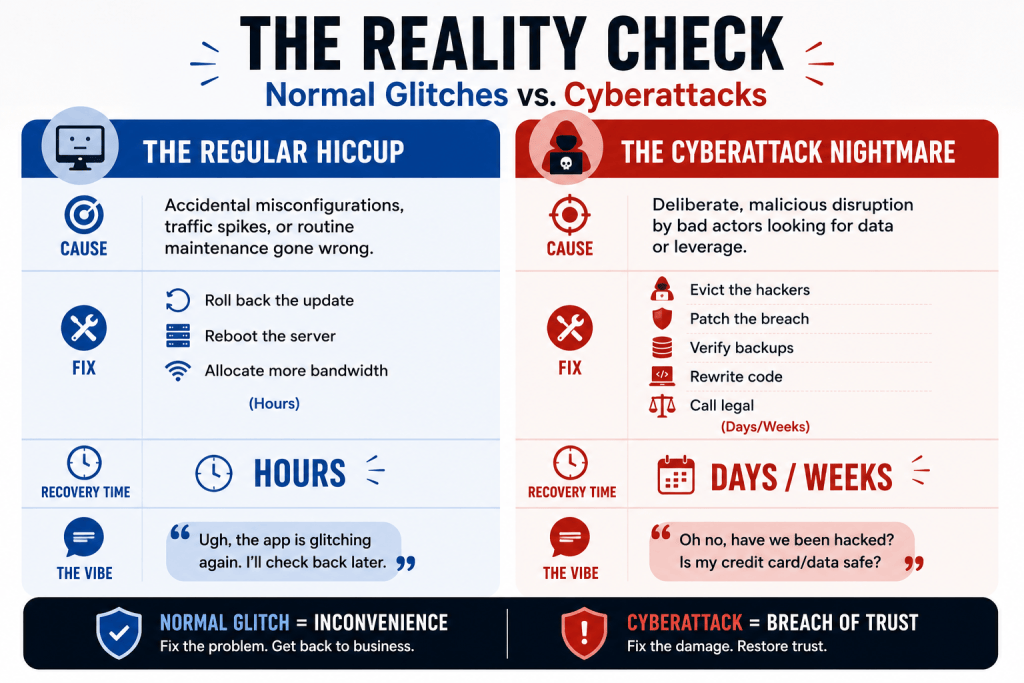
We’ve all been there—you refresh a page, get a spinning wheel of death, and sigh. Most of the time, digital outages are just minor speed bumps. A server gets overloaded, a routine update goes sideways, or someone trips over a virtual power cord. Usually, tech teams patch it up, and life moves on within an hour or two.
But then there’s the other kind of outage. The kind that drops like an anvil and stays down.
When hackers breach a system, recovery isn’t as simple as turning the servers off and on again. It triggers a grueling marathon of forensic investigations, hunting for backdoor vulnerabilities, scrubbing compromised data, and meticulously rebuilding systems from scratch. This is why cyberattack-driven downtime doesn’t wrap up by lunchtime—it stretches into days, sometimes weeks, leaving users stranded and platforms sweating under the spotlight.
Unlike a standard technical glitch, these incidents carry a heavy psychological weight. The moment the word “cyberattack” or “ransomware” enters the chat, the narrative changes. Users don’t just feel inconvenienced; they feel exposed. And as the downtime drags on, innocent impatience quickly curdles into full-blown panic.
The Reality Check: Normal Glitches vs. Cyberattacks
Why is the Tech Team Taking So Long?
To the frustrated user staring at a 404 error, it looks like nothing is happening. In reality, behind the scenes, the IT and security teams are fighting a multi-layered war. They can’t just rush to turn things back on because bringing a compromised system online too early is like inviting the burglar right back through the front door.
The recovery checklist usually looks like this:
- Forensic investigation — figuring out exactly how the hackers breached the perimeter.
- Containment — isolating affected systems so the infection doesn’t spread.
- Ransom dilemma & negotiation — in some cases, insurers and incident response teams step in to evaluate ransom demands and decide if paying is the fastest way to get a decryption key.
- Patching vulnerabilities — slamming the backdoors shut and reinforcing the locks.
- Restoring backups — painstakingly rebuilding lost or corrupted data (and hoping backups weren’t compromised).
- Regulatory red tape — navigating compliance, legal disclosures, and privacy laws before relaunch.
Every single one of these steps adds hours, if not days, to the clock.
Case Study: The Canvas by Instructure Meltdown
An textbook example of this grueling timeline played out recently with Canvas by Instructure, the digital backbone for countless schools and universities. When Canvas took a hit from a cyberattack, it didn’t just cause a temporary blip—it triggered a multi-day blackout that threw education into chaos.
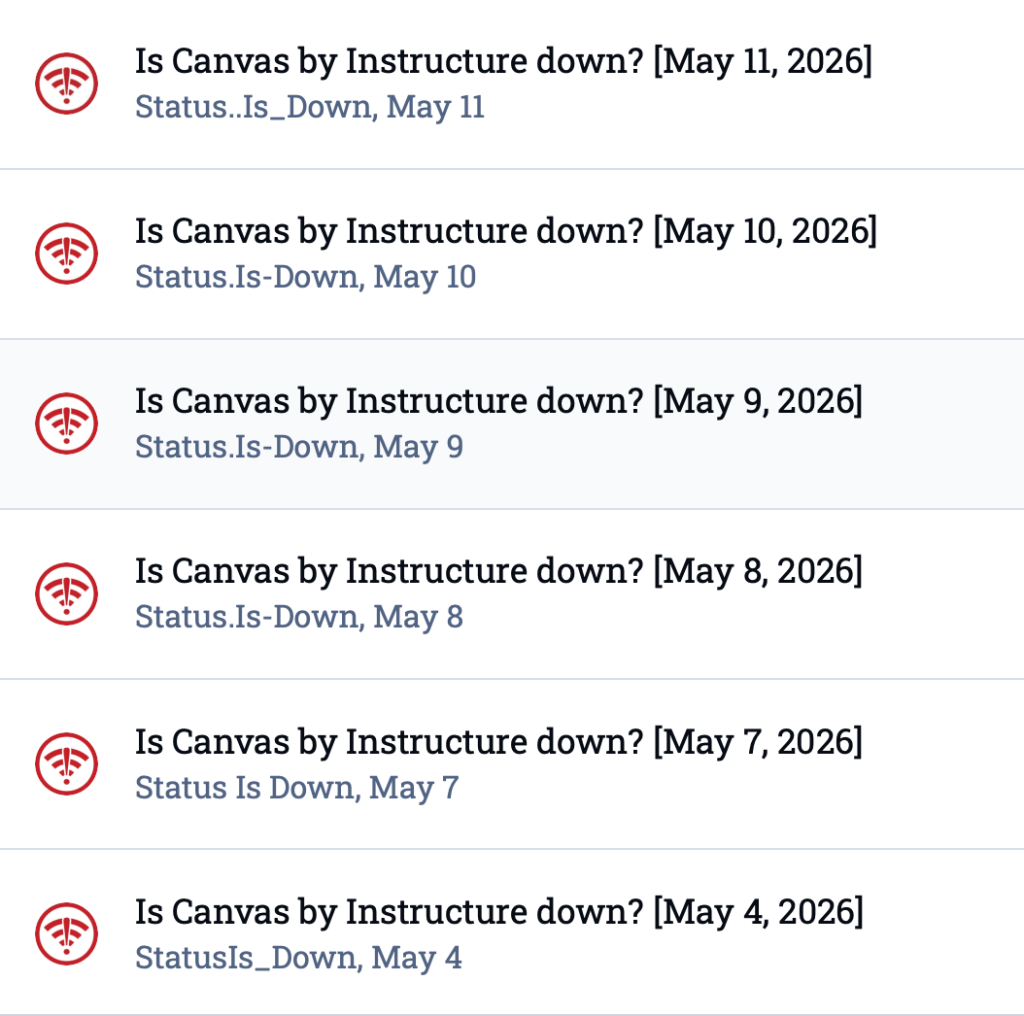
Students couldn’t turn in finals, professors couldn’t grade assignments, and communication tools vanished. Because the platform suffered an initial blow followed by a massive secondary wave on May 7, user complaints on tracking forums began stacking up on May 4 and didn’t stop flooding in until May 11.
Canvas couldn’t just flip a magic switch. They had to systematically sweep their infrastructure, secure student data, and ensure the environment was 100% safe before letting millions of users back in. For users trapped in that loop of refreshing the page, hoping for a login screen and getting a timeout error, those days felt like an absolute eternity. It perfectly illustrated the brutal reality of modern incident response: you don’t rush security.
From the Classroom to the Living Room: The La Poste & La Banque Postale Holiday Blackout
During the December 2025 holiday rush, La Poste and La Banque Postale—France’s national postal service and its retail banking arm—experienced a DDoS cyberattack that disrupted their digital infrastructure.
As part of the defensive response, large portions of their online presence were taken offline for several days, leaving customer‑facing websites and mobile banking apps showing only server errors. Because the outage coincided with the busiest shopping and banking week of the year, complaints spiked as users struggled to track parcels or access funds.
The disruption spread beyond these two institutions, with Caisse d’Épargne and Banque Populaire also reporting service slowdowns. While the incident did not involve a breach of customer data, the scale and timing amplified public alarm. Whether it was students locked out of Canvas or holiday shoppers blocked from La Poste, the reality was the same—cyberattacks can shut the doors of digital services for days, communication turns vague, and users are left refreshing broken pages.
The Takeaway
Cyberattack outages do more than disrupt daily routines. They reshape our relationship with the technology we depend on. The “long road to recovery” is not engineering failure but the unavoidable tax of digital security. Hackers strike in minutes, yet rebuilding trust and safety takes days. The wait feels endless, but in today’s internet age it has become part of the reality we live with.
Survival Guide: Preparing for the Next Digital Blackout
For the Platforms
- Immutable Backups: Have backups that hackers can’t touch, alter, or encrypt.
- Transparent Communication: Don’t ghost your users. If you got hit, tell them. Silence feeds the rumor mill.
- Battle‑Ready Response Plan: Keep a rehearsed playbook so your team knows exactly what to do when the attack hits.
For the Users
- Data Hygiene: Stop reusing passwords across platforms. Turn on Multi-Factor Authentication (MFA) everywhere you can.
- Manage Expectations: Accept that when a major service goes down due to a hack, you won’t be logging back in anytime soon.
- Stay vigilant: Watch for unusual emails, texts, or calls that may exploit the outage. Phishing attempts often spike when users are anxious and looking for updates.
For the Community
When major platforms go dark, official status pages often retreat into vague corporate language. That’s when Status Is Down becomes essential. It’s not just about outage figures—it gives users a place to cross‑reference what they’re seeing, realize they’re not the only ones locked out, and share frustrations in real time. Scattered complaints become a chorus everyone can hear, turning confusion into collective awareness while engineers focus on recovery.
Image: Eakrin Rasadonyindee | Dreamstime.com